My work utilizes discarded objects and plant life collected from my surroundings. Some of the material is embedded between layers of gypsum cement to represent the passage of time. Replicas of objects are cast in resin or plaster and become pieces for an assemblage. Found paper is decollaged together and drawn into to create imagined landscapes.
Art Projects
Carlos Mercado
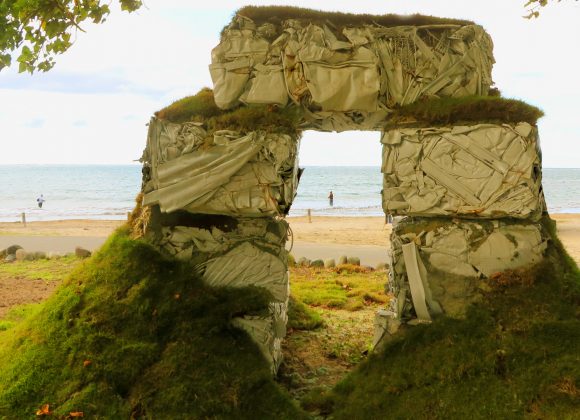
In the Caribbean there were several pre-Columbian cultures and the work "Untitled" is a reinterpretation of this rich heritage. These ethnic groups did not develop an alphabet, but their petroglyphs are still found in special places, particularly in ceremonial centers similar to the one recreated in this work. In excavations prior to the construction of the Dorado Beach Resort remains of these ancestors of the Puerto Ricans were found , so the artist Carlos Mercado appropriated their graphic language, but using contemporary resources, to pay homage to the first artists of Dorado.
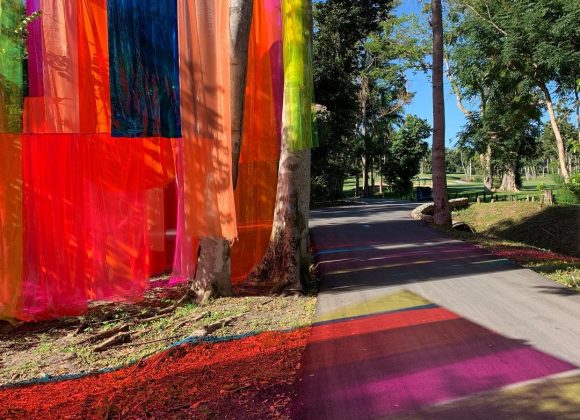
Ivelisse Jiménez
In her practice, painter Ivelisse Jiménez has explored the limits of chromatism beyond painting and canvas, filling entire spaces with color without the need for a brush. The artist uses processed materials, such as fabrics, plastics and pastes, along with acrylic paintings to create bright compositions that surpass the limits of a frame. "Untitled" is her first intervention into the woods, and she used the forest itself as support for the work. As a result, the viewer goes through a kind of labyrinth of colors that provokes the experience of entering a kaleidoscope.
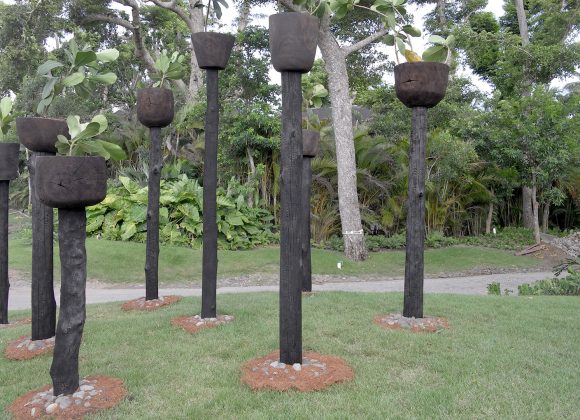
Vientre Compartido
The Suárez brothers have made their career by addressing ecological issues through their art production. As nature one of their main inspirations, the hurricanes that hit Puerto Rico in 2017 affected their job. Mata Palo (Killer of trees) is a colloquial name given to the Cupey tree because of its aggressive growth that sometimes affect other species; but it also refers to the hurricanes that killed so many trees. In this sculpture, the artists make reference to nature’s way of being, literally lifting up new life from the fallen.
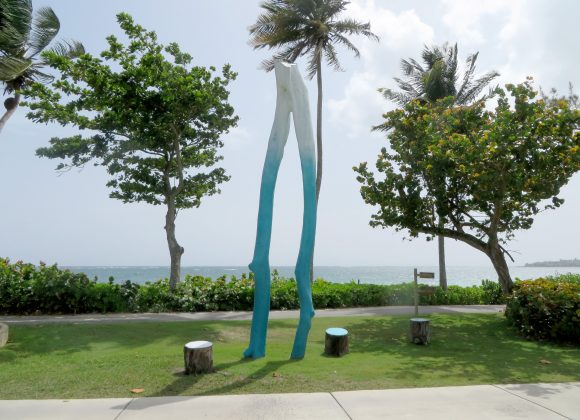
Nosotros
In 2010, Eva Kullgren, a Swedish housewife, left Stockholm on a small sailboat, without electronic navigation instruments, like the ancient Vikings. She sailed through the Black Sea to the Mediterranean coasts and, upon reaching Cape Verde, she ventured into the immensity of the Atlantic Ocean. After 18 days she reached Brazil; but on her way back to the U.S.A., the sailboat suffered damages and the marine currents brought her to our shores of Dorado Beach. Those same currents brought us the tree from which this sculpture was created to honor our contemporary Viking Shipwreck.
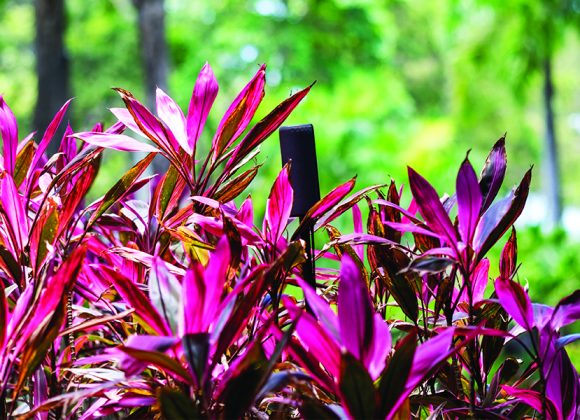
Jaime Rodríguez Crespo
“An Air from the City is a quest of how to raise awareness and treasure nature, how to coexist without destroying it. “Concrete doesn’t give us fresh air”. Conceptually speaking An Air from the City still being developed; I think the impact it generates the experience in the spectator is the final concept: to reach the goal of making them treasure what’s left of nature.”
Rodrigo Montenegro
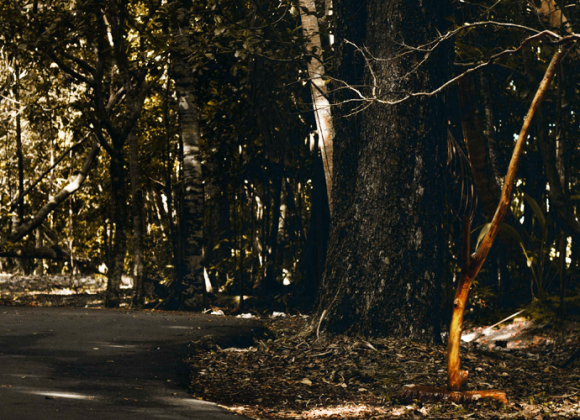
As part of arte_FITS.FOUNDATION’s artist residency program, Puerto Rican born and based artist, Rodrigo Montenegro, produced Danza del Viento, an artisan sculptural series that aims to explore the revitalization of nature through balance and movement. Throughout the years Montenegro has developed his sculptures with a variety of methods and materials ranging from sand to stone. The mystic element in each piece becomes essential as he sculpts the esoteric messages and figures that ultimately form the artwork. In a more commercial approach, Montenegro has been known for creating stone and sand made furniture and company logos.
Jaime Rodriguez Crespo
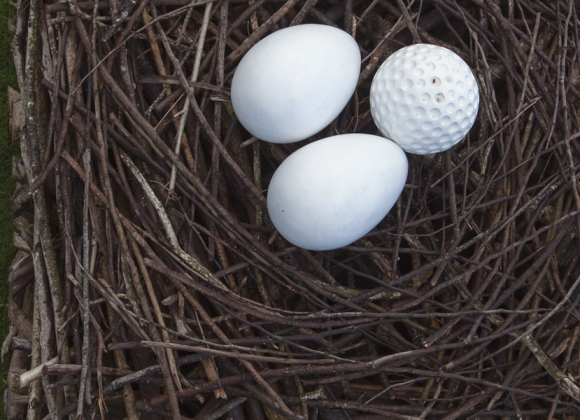
In Hole in One Jaime Rodriguez Crespo studies the unnoticed intrusion of human involvement in nature amongst natural objects. Just as a golf course consists of an artificial landscape made up of natural elements, the artist creates a bird’s nest that has obviously succumb to human imposition due to its size and placement as a site-specific sculpture. The similarity that exists between the two eggs and the golf ball also addresses the artificial nature of the landscape: as a synthetic object blends in with organic elements.
Jorge Díaz
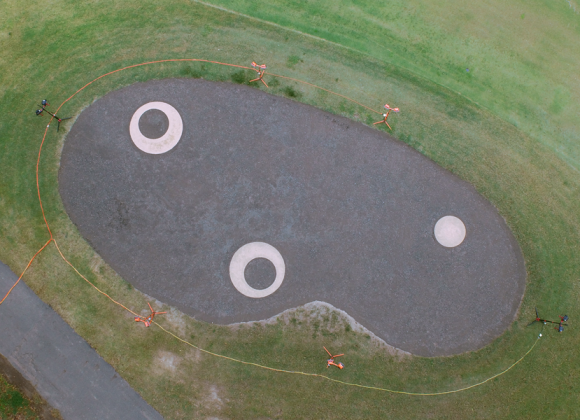
Jorge Díaz is a Puerto Rican based artist known for creating distinctive installations of urban objects and sceneries inside closed-controlled spaces. For his participation in Art In Golf Triennial 2015, Díaz created Public Grounds were the concept of time in the urban spaces was questioned by using eroded gravel found in the corners of the streets to create drawings on the sand trap.
Miruna Dragan
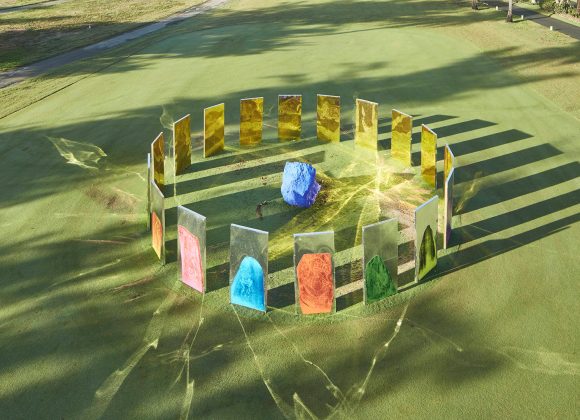
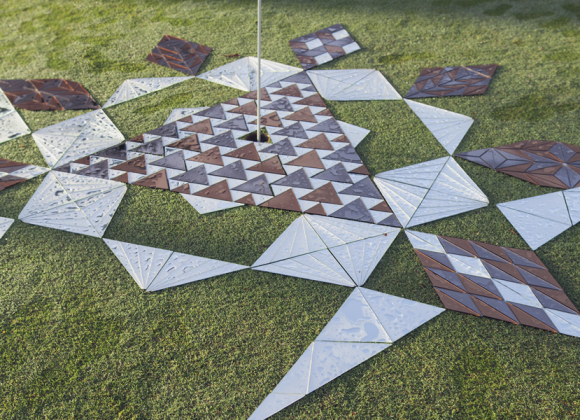
Through mosaic patterns, Miruna Dragan’s Fertile Void IX: Infinite Prosperity produces a contradictious parallel form of perspective were the reflection of the mirrors provide an equal opening to two of the farthest points of our existence, up in the sky and into the abyss.The ninth piece in the series Fertile Void, possibly the last, persuaded Dragan to surround its meaning with the mysticism of the number nine.
Aisen Chacín
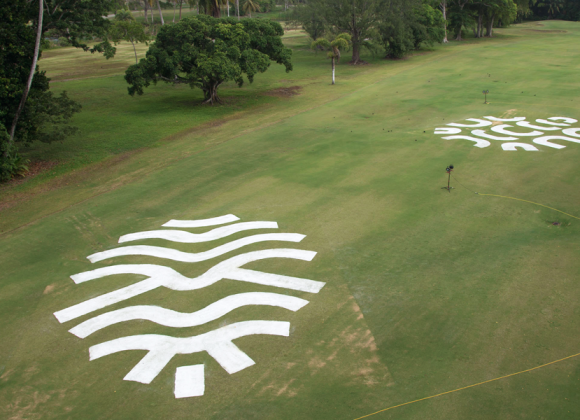
“In golf, the term “rough” identifies a part of the course where the grass is much more abundant. It also identifies the hardships turtles are going through in this century. The term explains how our modern lifestyle has inflicted severe ecological changes that have affected them as marine specie. The idea of the “tour” is to walk through the holes in the course and find a variety of geometric patterns inspired by the designs and protuberances that turtles have on their shells.”
Carlos Mercado
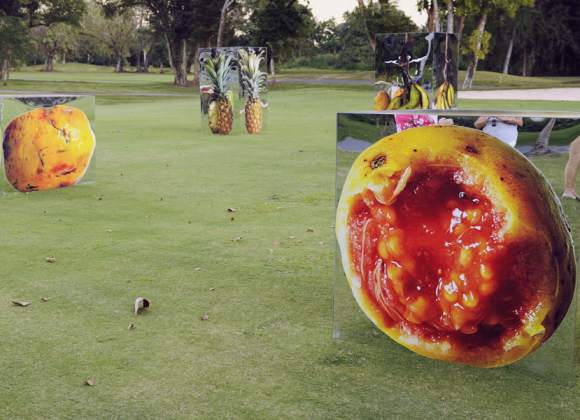
Alternative Nature was composed of the digital prints of several tropical fruits inside acrylic mirror boxes. These boxes were scattered around an area in the golf course of Dorado Beach allowing the surrounding nature to serve as a canvas. This characteristic allowed for the spectators to act as an element of the installation, thus creating an interrelationship between the artwork and the spectators.
Takashi Hinoda
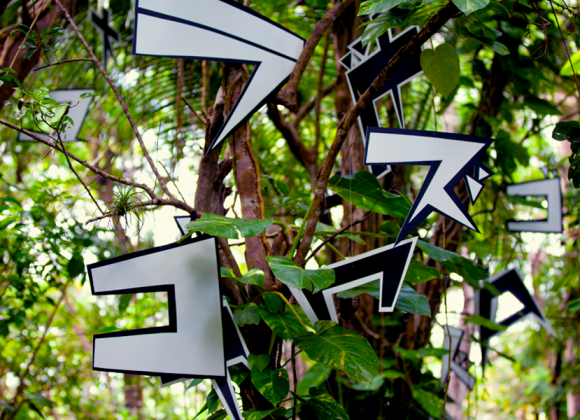
The installation, Unsounded Voices; based on the Japanese syllabary, Katakana; was located in Dorado Beach’s Pterocarpus Forest. The pieces were hanged from the trees at altering heights and planes “with the intention of creating a harmonious composition within the environment”. For the artist, the installation represented a divergence from his usual artwork due to its temporary state as well as the materials used.
Rafael Trelles
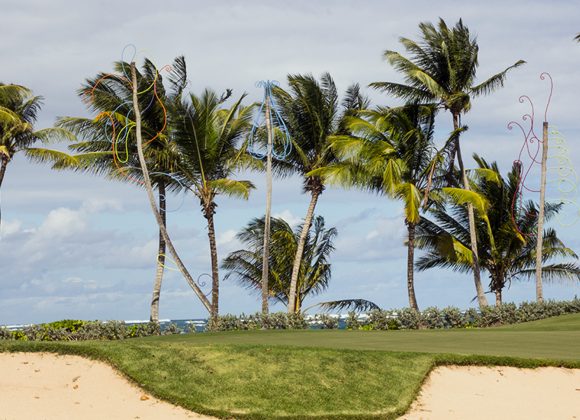
High in the dry trunk of several palm trees, Rafael Trelles is able to create beauty from death. Looking pass the aridness of the palm trees, in his sculpture; Rebirth of Dorado’s Palm Trees; the dry wood is represented by rebirth as a metaphor of creation. Trelles’ sculpture involves plastic tubes that were painted with aerosol in colors attractive to the eye with iron rods inside them in order to properly freeze and mimic the movement of the palms and flat forms made of zinc also painted with attractive colored aerosol. Thus, the intention of the sculpture is to resemble a frozen swing in order to delight one in the ephemeral instant of rebirth through art. “[The Rebirth of Dorado’s Palm Trees] summons one to imagine the rebirth of the dead palm trees in order to envisage for an instant, while it is being aesthetically contemplated, the triumphant possibility of art and love beating death”.
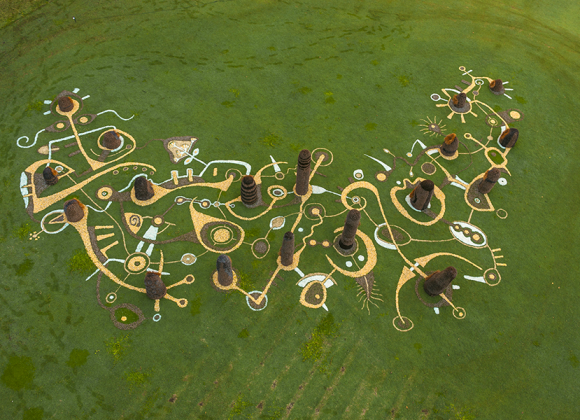
Vientre Compartido
Vientre Compartido, the Suarez brothers, represent nature’s cycle of life regeneration in Nicho. The sculptures have an organic configuration, like phallic totems with cavities understood as mouths or vaginas, which reinforce the biological concept of the artists’ proposal: the interest for ecological art and the idea of nourishment. As twin brothers, the Suarez must feel the need to let the world know the importance of an evolutionary ecosystem. Not only did they create housing for animals but also a drawing made of seeds allowing the growth and expansion of their ephemeral art. “By discovering the ability to create with the minimum, one becomes worthy of the uttermost possibilities”.
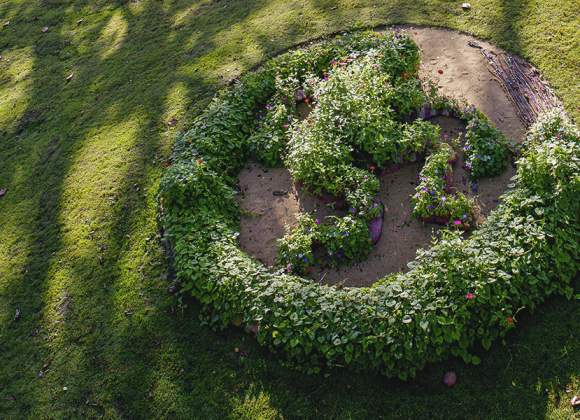
Cristina Salas
Muneca Viajera’s ephemeral evolution grasps the concept of, as mentioned before, regeneration: its fabrics decompose on the ground as flowers replace the strings’ colors. The process this doll goes through is most definitely a mimic of life through biophilia, meaning to have innate love for life and the natural world in it. “The project is mostly about the journey of the piece from Ecuador to Puerto Rico while reflecting about the cultural changes within its trip”.
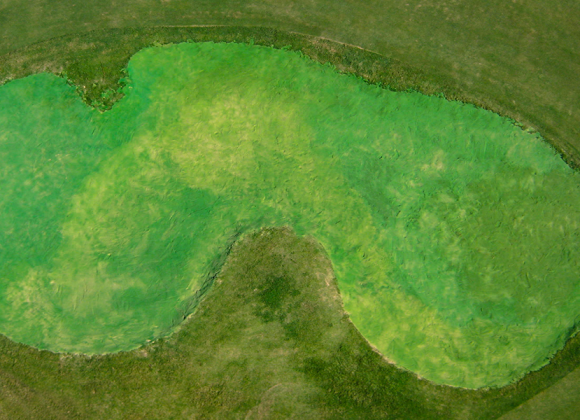
Chemi Rosado Seijo
It upsets the rules of the game [golf] and the ecosystem’s modification made by the course’s designers while intervening as the mimicry some animals possess, camouflage. Chemi Rosado’s piece, Trampa de Arena Verde (Green Sand Trap), is not a sculpture that utilizes physical materials for Rosado dressed up as an activist gardener and covered several sand traps of the golf course in organic green dye with the intention of having grass grow. As a way to challenge the golfer’s eye, from a certain distance the sand trap was distinguishable. Nevertheless, after several weeks it [sand trap] ended up blending with the environment as a way of somehow allowing nature to take control of the surroundings.
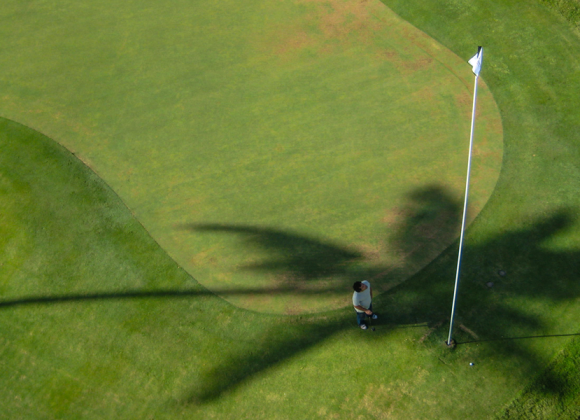
Jesús “Bubú” Negrón
The vertical sculpture by Jesus “Bubu” Negron goes by the title Top Flag. The red flag waves high in a thumping pole whose height competes with its surrounding palm trees, allowing the breeze to rock the flag along with the rhythm of the neighboring trees. Although it contributes to a decontextualize idea of art merchandise; since most people believe art is suppose to only be beautiful; the flag also provides a representation of both the pop (criticism, irony, and humor) and surreal (dreams and unconsciousness).
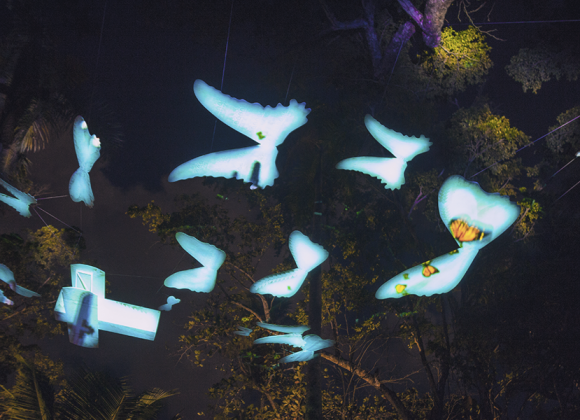
Anaitté Vaccaro
Inspired by the history of Clara Livingston, Vaccaro finds muse to create the digital scenery that is Wind Chime for Clara. The work is a tribute to wind and Clara’s imprint on Puerto Rico. Clara Livingston was one of the pioneer women in aviation and she created the first private airport in the island at Dorado.
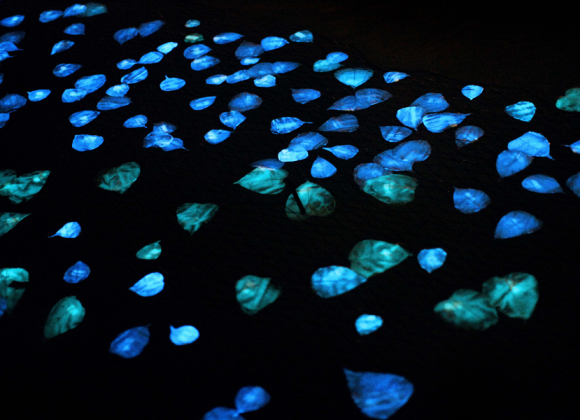
Miya Ando
“This piece [Obon: Puerto Rico] is inspired by the ancient Japanese festival of Obon. The ancient event; which occurs every 15th day of the 7th month of the Lunar Calendar {mid-August}; is a three day ceremony made to commemorate and honor the departed. It is believed that during Obon, the spirits of one’s departed family members and ancestors return home and are reunited with their loved ones. Lanterns are hung inside the house to welcome the spirits and on the evening of the last day, the lanterns are placed on rivers in order to guide the spirits back to the netherworld. There is a beautiful non-denominational notion of respect, interconnectivity, history, and memory that is celebrated with the festival of Obon”.
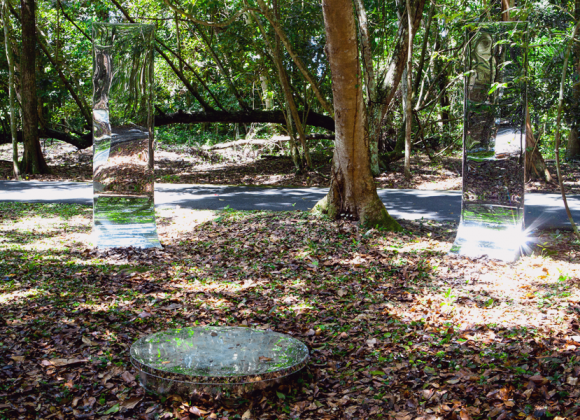
Vilmarie Serrano
It is often said that the representation of the sublime does not suffice to express this unique concept. It is necessary to previously experience the sublime, throughout day-to-day life experiences. Only then, the artist evolves into an explorer of natural places and settings. Often unobserved by the common eye, these spaces become the idyllic backbone for the development of the artwork, offering us a significant aesthetic experience. Certainly, this description fits the installation “The Regeneration Circle”, which Vimarie Serrano has presented in a small natural reserve in Dorado.
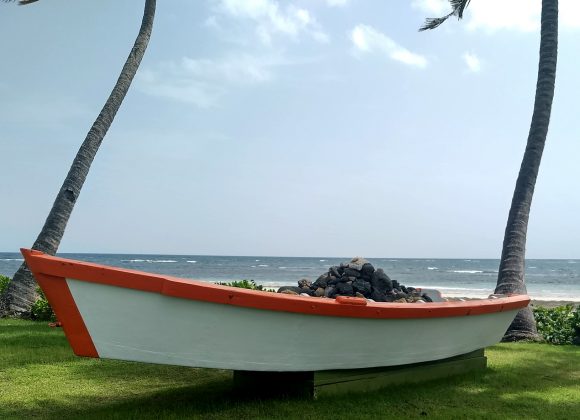
Kim Myeongbeom
Journey is a participatory art project inspired by a popular Korean folk religion influenced by Buddhism. Each stone inside the fisherman’s boat corresponds to a personal wish; while passing by, people add one stone found around the path and make a wish. Through this cooperation, Korean artist, Kim Myeongbeom recreates an accidental sculpture and appeals to the participant’s imagination and desires, inviting the viewer to take part in a shared voyage.
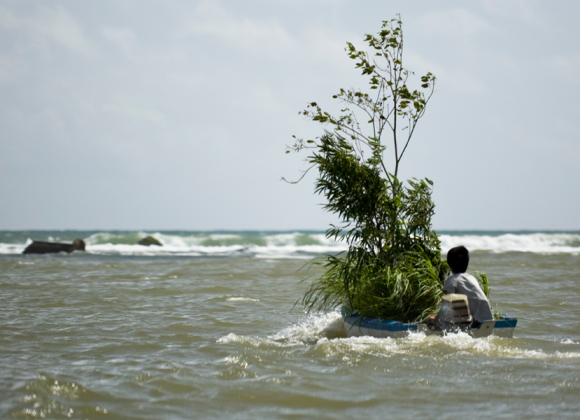
Kim Myeongbeom
Imagine waking up one day and looking out the window to enjoy the surroundings. When all of a sudden, out in the body of water that swims along where you are, a small boat with “extravagant trees, plants, and shrubs” appears. Immediately, issues such as locational identity and immigration begin to surge from the depths of the mind. So you wonder whom, how, and why as the boat floats on its own business fulfilling the artistic purpose behind it.
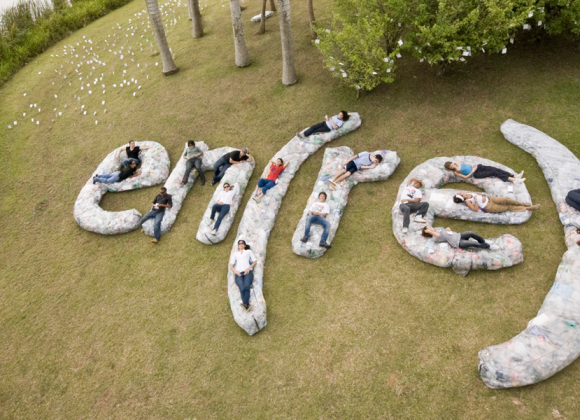
Teresa Mulet
As part of the inauguration of arte_FITS.FOUNDATION’s community program Dorado Es Verde, Venezuelan artist Teresa Mulet presented the collaborative project, en(re) for the communities of Dorado. The project incorporated a direct participation of high school students from José Santos Alegría and Tasis Dorado.
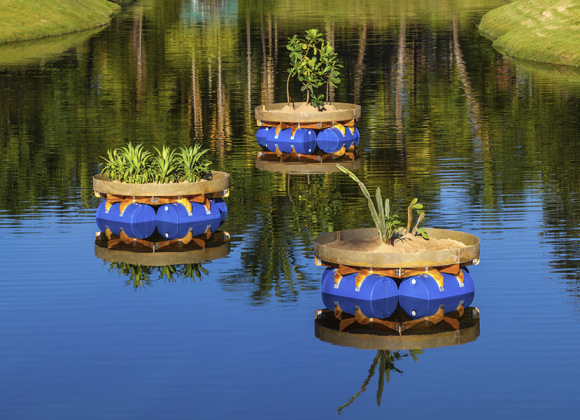
Manolo Rodríguez
According to Buoyancy (The ability to float) was made in 2011 as an experimental site-specific artwork with variable dimensions. The materials used were fiberglass, resin, aluminum, wood, plastic drums, and plants such as Cupey (Clusia Rosea), Maguey (Agavaideae Asparagacea), & Cactus (leptocerusquadricostatus).
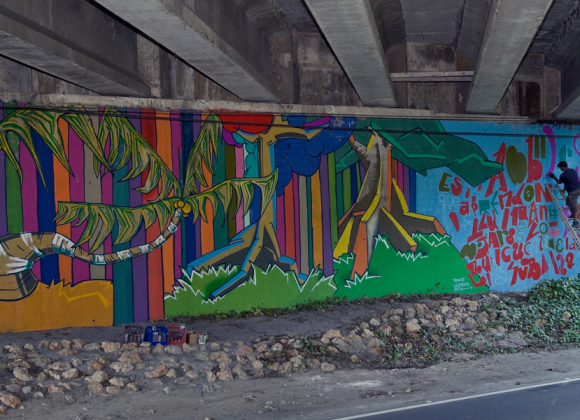
Pseudomero
The winner and inaugural artist of Yearly Open Call 2010 was the Puerto Rican urban artist, Pseudomero. His artistic intervention, Trees of the World, involved the creation of two murals on the bridge at Road 693 were the inspiration was derived from Puerto Rican writer and activist Clemente Soto’s poem Estos árboles. The murals contained a combination of visual imagery, portraying in a vibrant way the most emblematic trees in Puerto Rico: the Palm Tree, the Flamboyán, and the Ceiba. It also contained excerpts [stanza’s 2 & 4] from Soto’s poem, which allowed the exploration of the written word as an image.
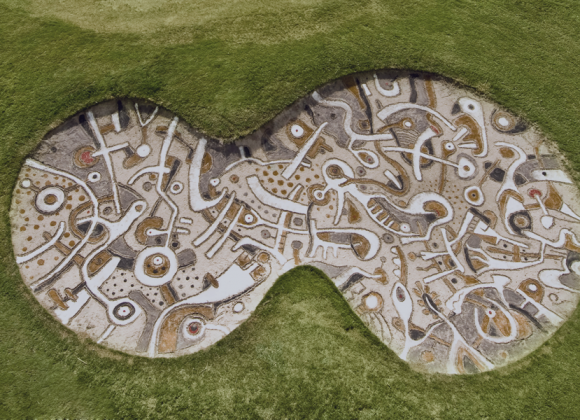
Vientre Compartido
In December 2009, the brainstorming of a utopian project began to unfold. After combing the “canvas” of Dorado and deciding how the twins would create the artwork, the concept was finally developed: an artistic intervention with a “sand trap” at the famous East Golf Course at Dorado Beach – the “Mona Lisa of golf courses”.
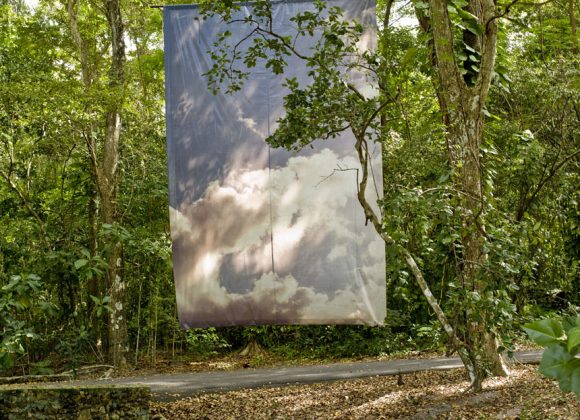
Quintín Rivera Toro
The installation, Un Espacio Libre, by Puerto Rican artist Quintín Rivera-Toro, was located at the Pterocarpus Officinalis natural reserve at Dorado Beach. The artwork could be understood as an actualization of the landscape conception. Un Espacio Libre consists of a photographic series at a monumental scale depicting clouds over immense blue skies. The images were primitively conceived and installed in the urban milieu of Quintín’s natal city, Caguas, P.R., as a critique toward visual contamination, usually generated by the surplus of signs and billboard advertising. The series was placed in public spaces designated originally for advertising purposes, offering the audience a visual relief from the endless publicity that calls every day to ones attention.
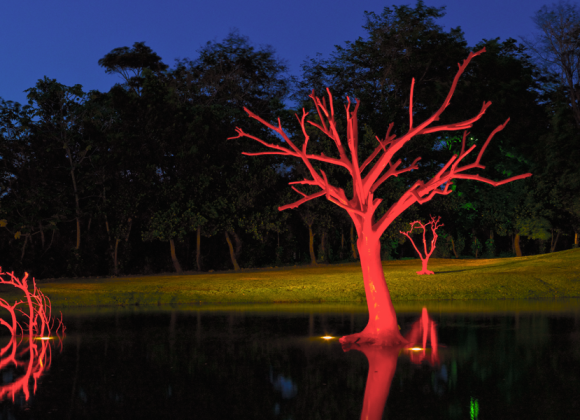
Rafael Trelles
The Forbidden Tree by Rafael Trelles; born in Puerto Rico with a bachelor’s degree in Plastic Arts from the University of Puerto Rico and graduate studies at the Academia San Carlos, Universidad Autonoma de Mexico; is a dry tree painted red located in the middle of a pond. The presence of this tree is filled with mythological, archetypal, but above all theological references for its purpose is to alarm us from the past of the future. It is about a call to reflection as asserted by the artist about our endangered natural environment; “The human being has disobeyed and is at the verge of expulsion from his only paradise”.
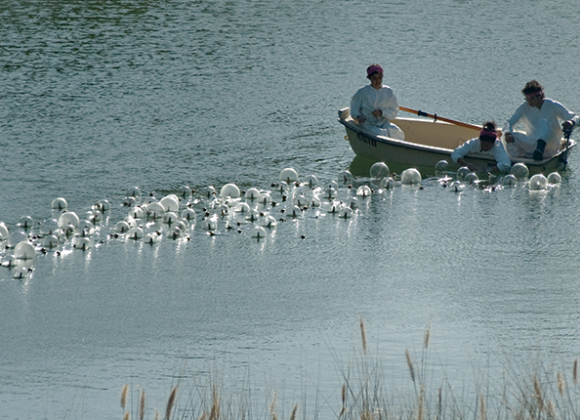
Dhara Rivera
Rivera’s most recent works explore the dichotomy between exterior and intimate spaces, between liberties and limits, and intimate space, between reality and imagination. The artist playfully combines an array of elements, which yield hybrids made up of a multiplicity of references.