
Muneca Viajera’s ephemeral evolution grasps the concept of, as mentioned before, regeneration: its fabrics decompose on the ground as flowers replace the strings’ colors. The process this doll goes through is most definitely a mimic of life through biophilia, meaning to have innate love for life and the natural world in it. “The project is mostly about the journey of the piece from Ecuador to Puerto Rico while reflecting about the cultural changes within its trip”.
Archives: Projects
Chemi Rosado Seijo
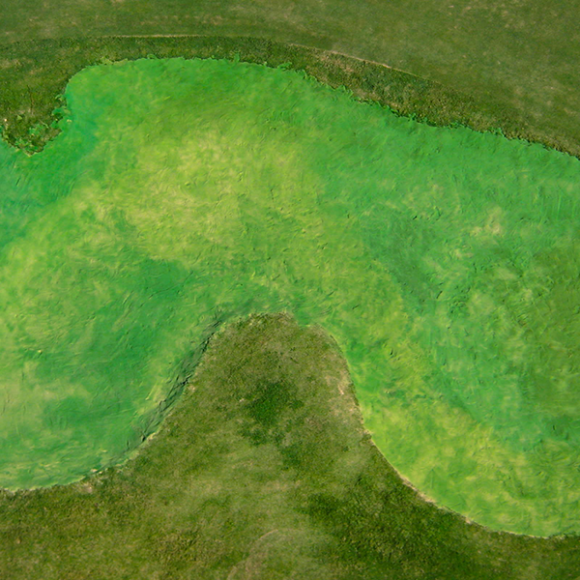
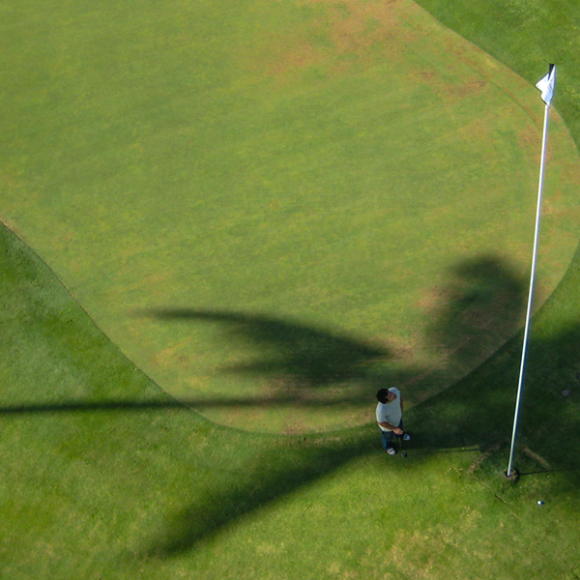
It upsets the rules of the game [golf] and the ecosystem’s modification made by the course’s designers while intervening as the mimicry some animals possess, camouflage. Chemi Rosado’s piece, Trampa de Arena Verde (Green Sand Trap), is not a sculpture that utilizes physical materials for Rosado dressed up as an activist gardener and covered several sand traps of the golf course in organic green dye with the intention of having grass grow. As a way to challenge the golfer’s eye, from a certain distance the sand trap was distinguishable. Nevertheless, after several weeks it [sand trap] ended up blending with the environment as a way of somehow allowing nature to take control of the surroundings.
Jesús “Bubú” Negrón
The vertical sculpture by Jesus “Bubu” Negron goes by the title Top Flag. The red flag waves high in a thumping pole whose height competes with its surrounding palm trees, allowing the breeze to rock the flag along with the rhythm of the neighboring trees. Although it contributes to a decontextualize idea of art merchandise; since most people believe art is suppose to only be beautiful; the flag also provides a representation of both the pop (criticism, irony, and humor) and surreal (dreams and unconsciousness).
Anaitté Vaccaro
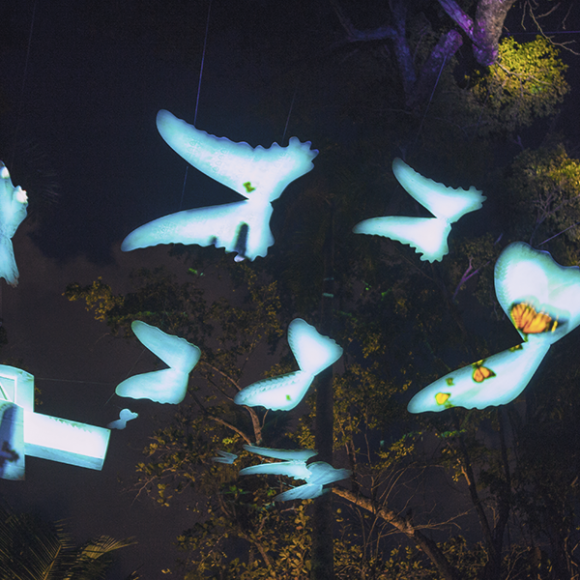
Inspired by the history of Clara Livingston, Vaccaro finds muse to create the digital scenery that is Wind Chime for Clara. The work is a tribute to wind and Clara’s imprint on Puerto Rico. Clara Livingston was one of the pioneer women in aviation and she created the first private airport in the island at Dorado.
Miya Ando
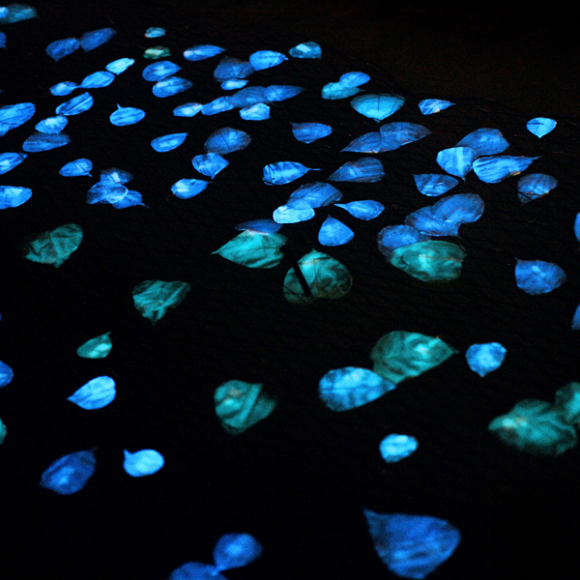
“This piece [Obon: Puerto Rico] is inspired by the ancient Japanese festival of Obon. The ancient event; which occurs every 15th day of the 7th month of the Lunar Calendar {mid-August}; is a three day ceremony made to commemorate and honor the departed. It is believed that during Obon, the spirits of one’s departed family members and ancestors return home and are reunited with their loved ones. Lanterns are hung inside the house to welcome the spirits and on the evening of the last day, the lanterns are placed on rivers in order to guide the spirits back to the netherworld. There is a beautiful non-denominational notion of respect, interconnectivity, history, and memory that is celebrated with the festival of Obon”.
Vilmarie Serrano
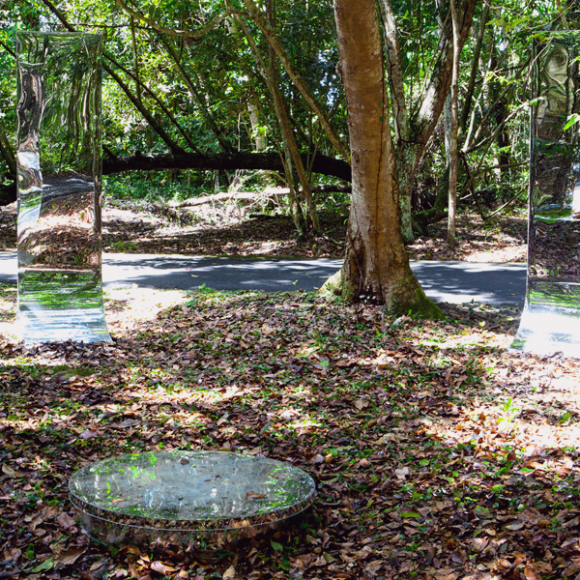
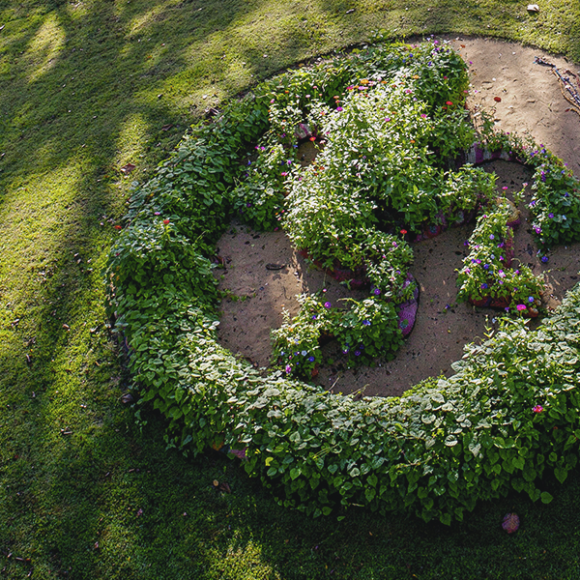
It is often said that the representation of the sublime does not suffice to express this unique concept. It is necessary to previously experience the sublime, throughout day-to-day life experiences. Only then, the artist evolves into an explorer of natural places and settings. Often unobserved by the common eye, these spaces become the idyllic backbone for the development of the artwork, offering us a significant aesthetic experience. Certainly, this description fits the installation “The Regeneration Circle”, which Vimarie Serrano has presented in a small natural reserve in Dorado.
Kim Myeongbeom
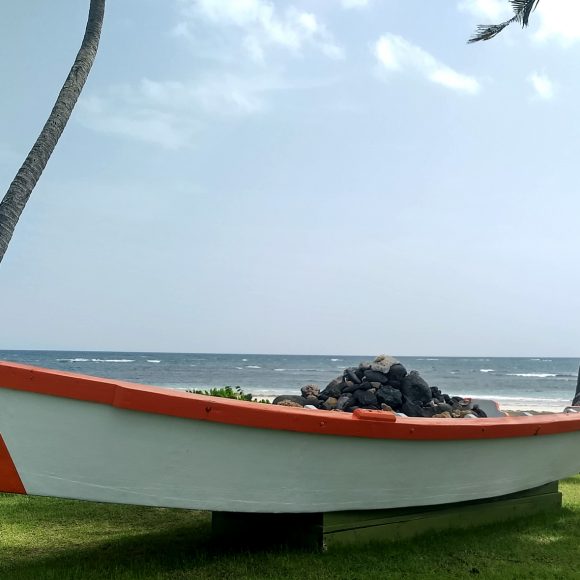
Journey is a participatory art project inspired by a popular Korean folk religion influenced by Buddhism. Each stone inside the fisherman’s boat corresponds to a personal wish; while passing by, people add one stone found around the path and make a wish. Through this cooperation, Korean artist, Kim Myeongbeom recreates an accidental sculpture and appeals to the participant’s imagination and desires, inviting the viewer to take part in a shared voyage.
Kim Myeongbeom
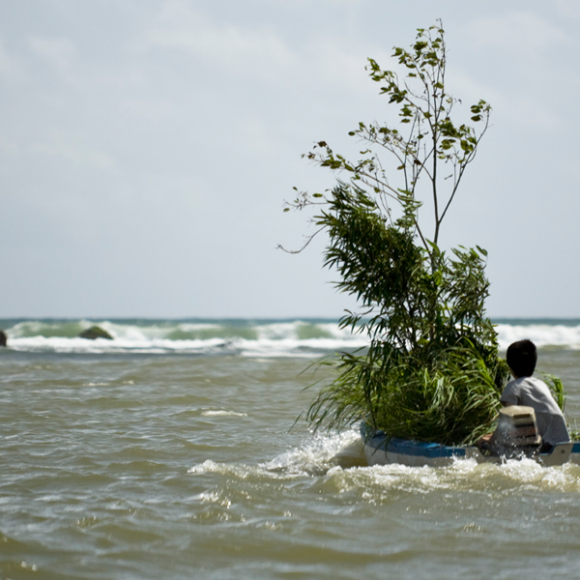
Imagine waking up one day and looking out the window to enjoy the surroundings. When all of a sudden, out in the body of water that swims along where you are, a small boat with “extravagant trees, plants, and shrubs” appears. Immediately, issues such as locational identity and immigration begin to surge from the depths of the mind. So you wonder whom, how, and why as the boat floats on its own business fulfilling the artistic purpose behind it.
Teresa Mulet
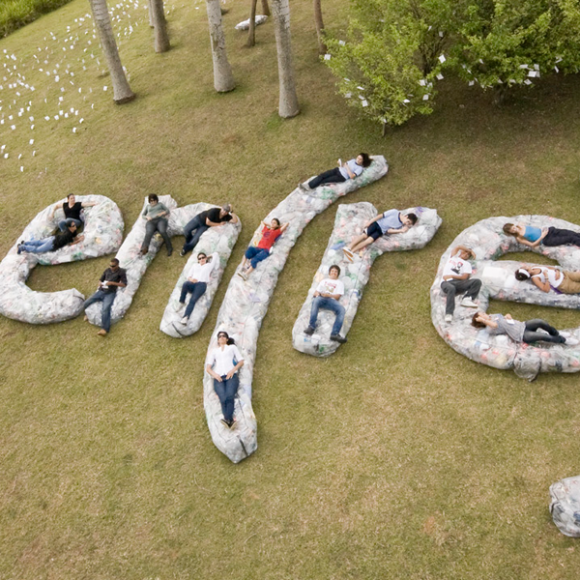
As part of the inauguration of arte_FITS.FOUNDATION’s community program Dorado Es Verde, Venezuelan artist Teresa Mulet presented the collaborative project, en(re) for the communities of Dorado. The project incorporated a direct participation of high school students from José Santos Alegría and Tasis Dorado.
Manolo Rodríguez
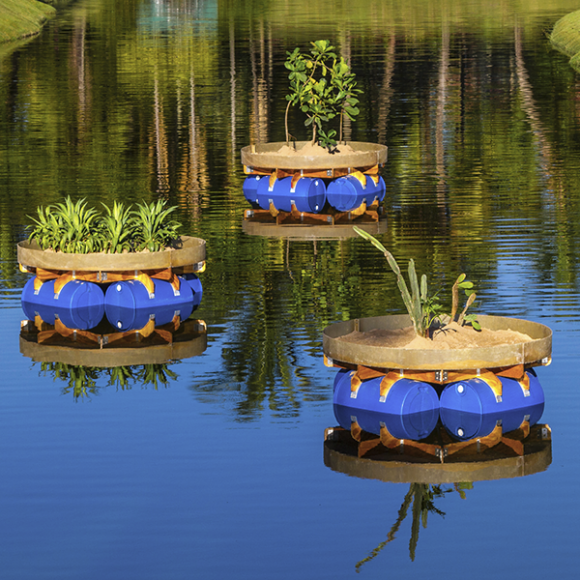
According to Buoyancy (The ability to float) was made in 2011 as an experimental site-specific artwork with variable dimensions. The materials used were fiberglass, resin, aluminum, wood, plastic drums, and plants such as Cupey (Clusia Rosea), Maguey (Agavaideae Asparagacea), & Cactus (leptocerusquadricostatus).