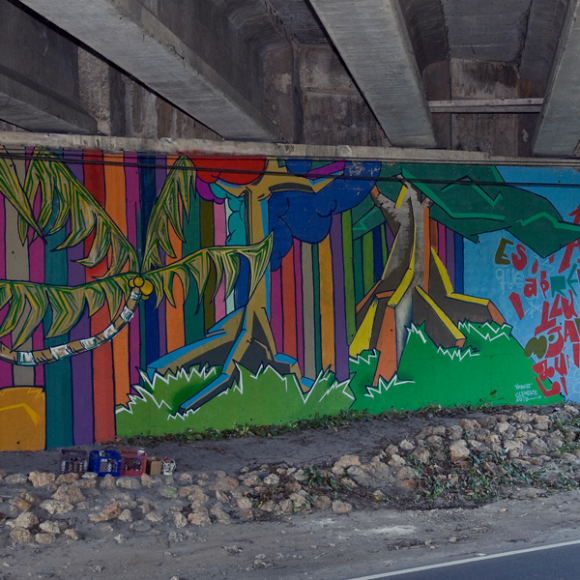
The winner and inaugural artist of Yearly Open Call 2010 was the Puerto Rican urban artist, Pseudomero. His artistic intervention, Trees of the World, involved the creation of two murals on the bridge at Road 693 were the inspiration was derived from Puerto Rican writer and activist Clemente Soto’s poem Estos árboles. The murals contained a combination of visual imagery, portraying in a vibrant way the most emblematic trees in Puerto Rico: the Palm Tree, the Flamboyán, and the Ceiba. It also contained excerpts [stanza’s 2 & 4] from Soto’s poem, which allowed the exploration of the written word as an image.
Archives: Projects
Vientre Compartido
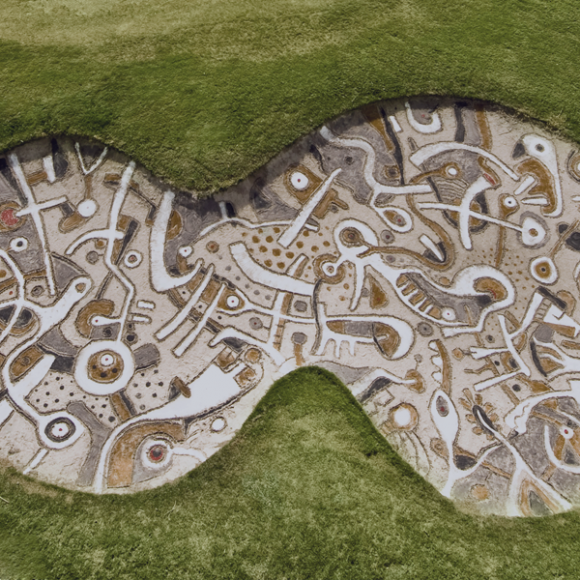
In December 2009, the brainstorming of a utopian project began to unfold. After combing the “canvas” of Dorado and deciding how the twins would create the artwork, the concept was finally developed: an artistic intervention with a “sand trap” at the famous East Golf Course at Dorado Beach – the “Mona Lisa of golf courses”.
Quintín Rivera Toro
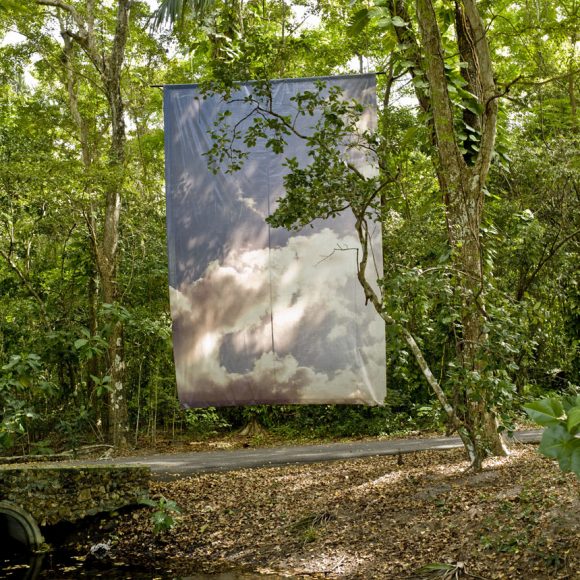
The installation, Un Espacio Libre, by Puerto Rican artist Quintín Rivera-Toro, was located at the Pterocarpus Officinalis natural reserve at Dorado Beach. The artwork could be understood as an actualization of the landscape conception. Un Espacio Libre consists of a photographic series at a monumental scale depicting clouds over immense blue skies. The images were primitively conceived and installed in the urban milieu of Quintín’s natal city, Caguas, P.R., as a critique toward visual contamination, usually generated by the surplus of signs and billboard advertising. The series was placed in public spaces designated originally for advertising purposes, offering the audience a visual relief from the endless publicity that calls every day to ones attention.
Rafael Trelles
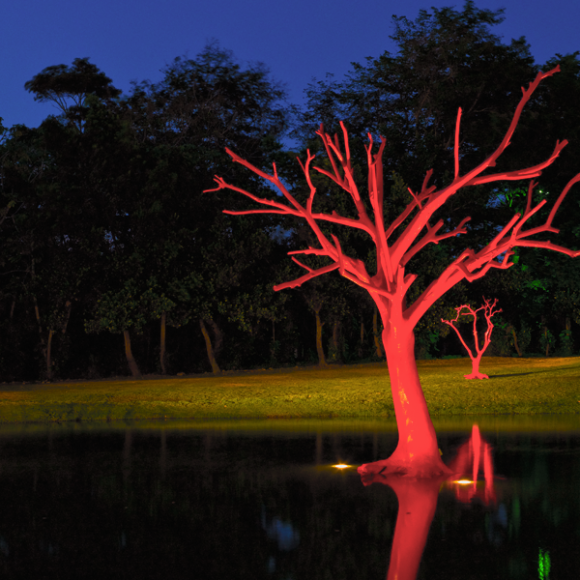
The Forbidden Tree by Rafael Trelles; born in Puerto Rico with a bachelor’s degree in Plastic Arts from the University of Puerto Rico and graduate studies at the Academia San Carlos, Universidad Autonoma de Mexico; is a dry tree painted red located in the middle of a pond. The presence of this tree is filled with mythological, archetypal, but above all theological references for its purpose is to alarm us from the past of the future. It is about a call to reflection as asserted by the artist about our endangered natural environment; “The human being has disobeyed and is at the verge of expulsion from his only paradise”.
Dhara Rivera
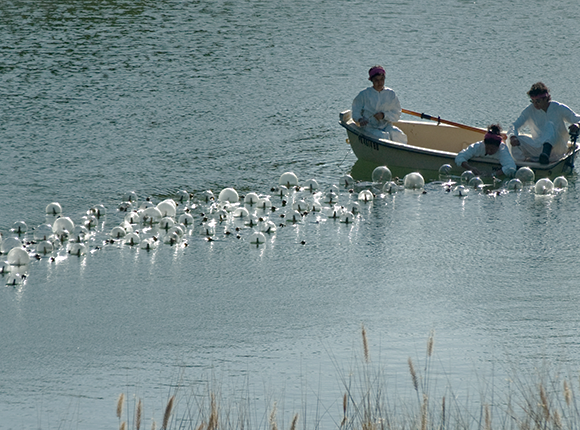
Rivera’s most recent works explore the dichotomy between exterior and intimate spaces, between liberties and limits, and intimate space, between reality and imagination. The artist playfully combines an array of elements, which yield hybrids made up of a multiplicity of references.